
Physical editions

The image is only half the work.

A wall edition is not finished when the image file is finished. Scale, surface, edge, light, and mounting complete the work.

Material follows meaning

Forge & Verse treats the physical form as part of the composition.

A piece that asks for luminous color, deep blacks, and a clean floating presence may belong on metal. A quieter work may need archival paper, visible fiber, and a substantial frame. The choice follows the image and the room rather than a default production catalog.
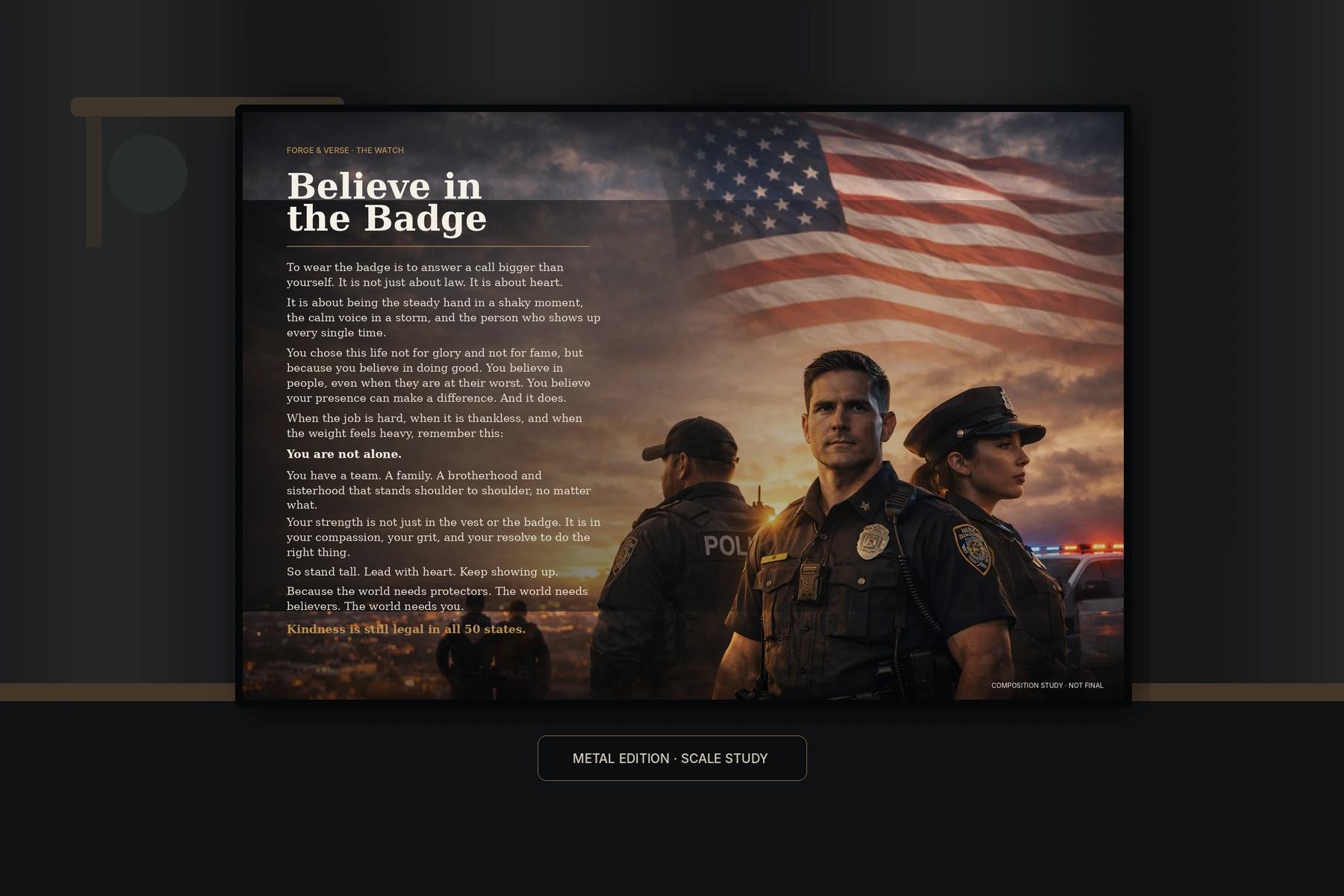
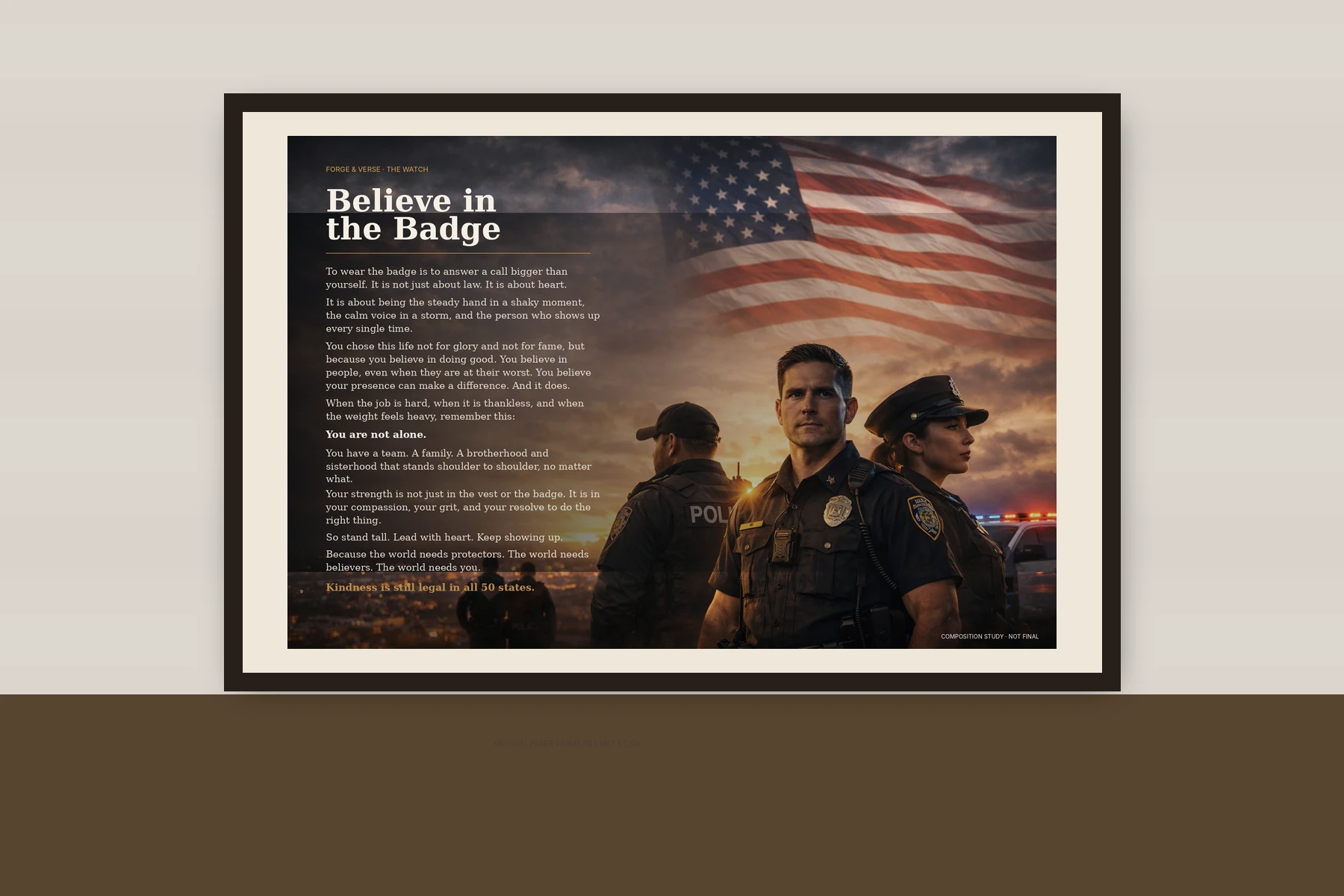
The same composition, two different rooms

Surface changes the voice.

Metal can carry luminosity and architectural presence. Paper can slow the work down and make the reading feel closer. Neither is automatically the premium answer.

Believe in the Badge shown as a floating metal edition in a dark professional room Open metal study
MetalSharper light, clean edge, floating presence.
Believe in the Badge shown on archival paper with a substantial mat and dark frame Open paper study
Archival paperWarmer reading, quieter surface, frame as architecture.
01 · Metal

Light becomes part of the image.

Metal suits work that needs crisp detail, saturated depth, luminous highlights, and a clean architectural presence. A float mount can let the edition sit slightly away from the wall rather than disappear into a conventional frame.

  • Deep blacks and controlled sheen
  • Edge treatment considered in the composition
  • Mounting selected for the room and scale
02 · Archival paper

Texture can quiet the room.

Paper serves work that benefits from warmth, visible fiber, restrained contrast, and the intimacy of ink on a physical surface. Mat, frame, and glazing should support the piece rather than turn it into office décor by default.

  • Paper stock matched to the typography and image
  • Low-glare presentation where appropriate
  • Framing with deliberate depth and proportion

Designed for a room

Scale is part of the sentence.

The final size follows reading distance, available wall space, text density, and whether the piece belongs to one person or a shared room.

Close

Personal office

Read from a chair or desk. Typography can be more intimate, and paper may carry the work beautifully.

Across

Lab or briefing room

Hierarchy must survive distance. A larger metal or framed edition can hold the room without becoming signage.

Passing

Shared corridor

The main line must land quickly while rewarding the person who stops long enough to read the full piece.

The decision

The room gets a vote.

A finished edition has to work in the light, distance, and visual noise of the space where it will live. The file is a beginning. The object completes the thought.

Open physical editions