
Field-test guide
Two-page interruption test, change rationale, and evaluation sheet.
Download fileOn the Anvil · The Examiner's Bench
Refined field proof
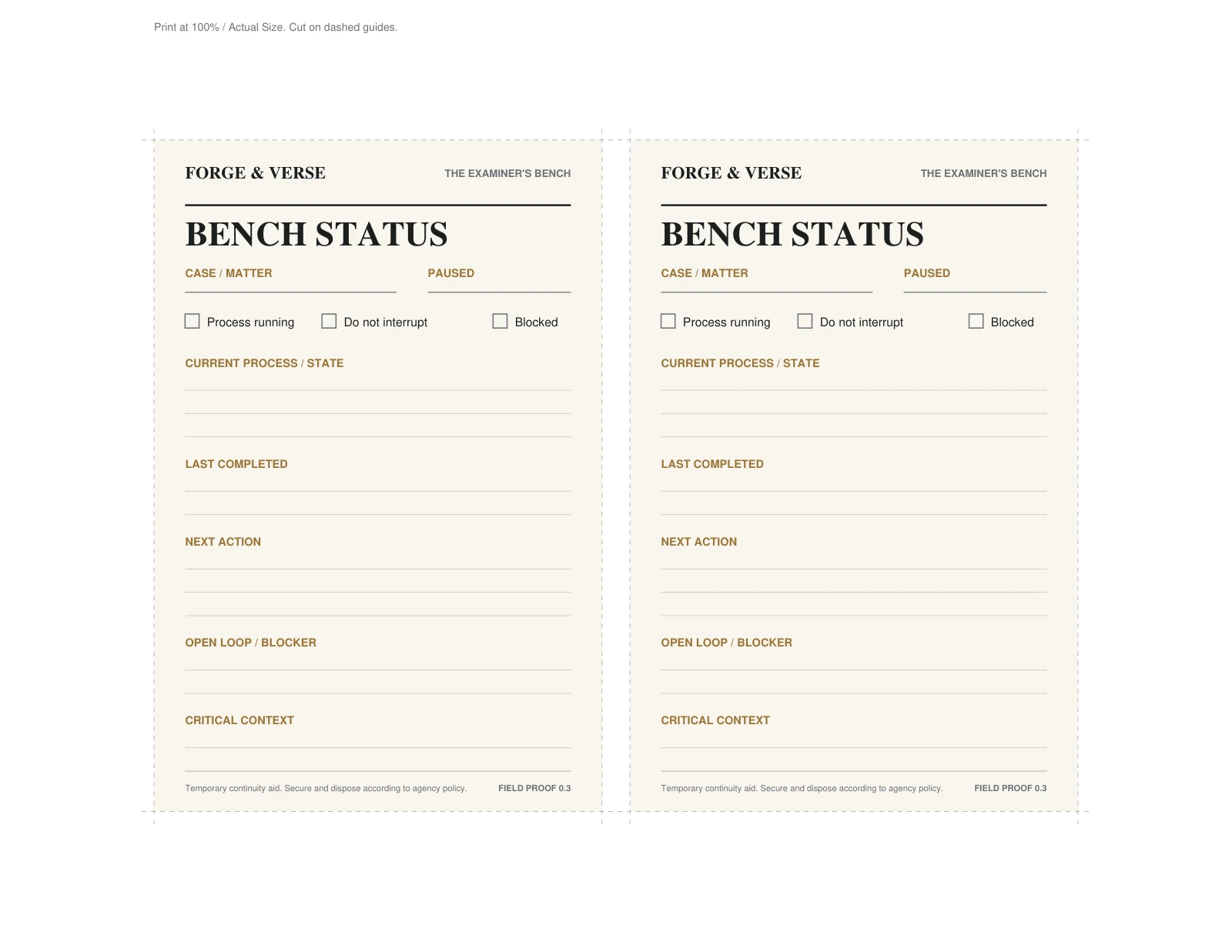
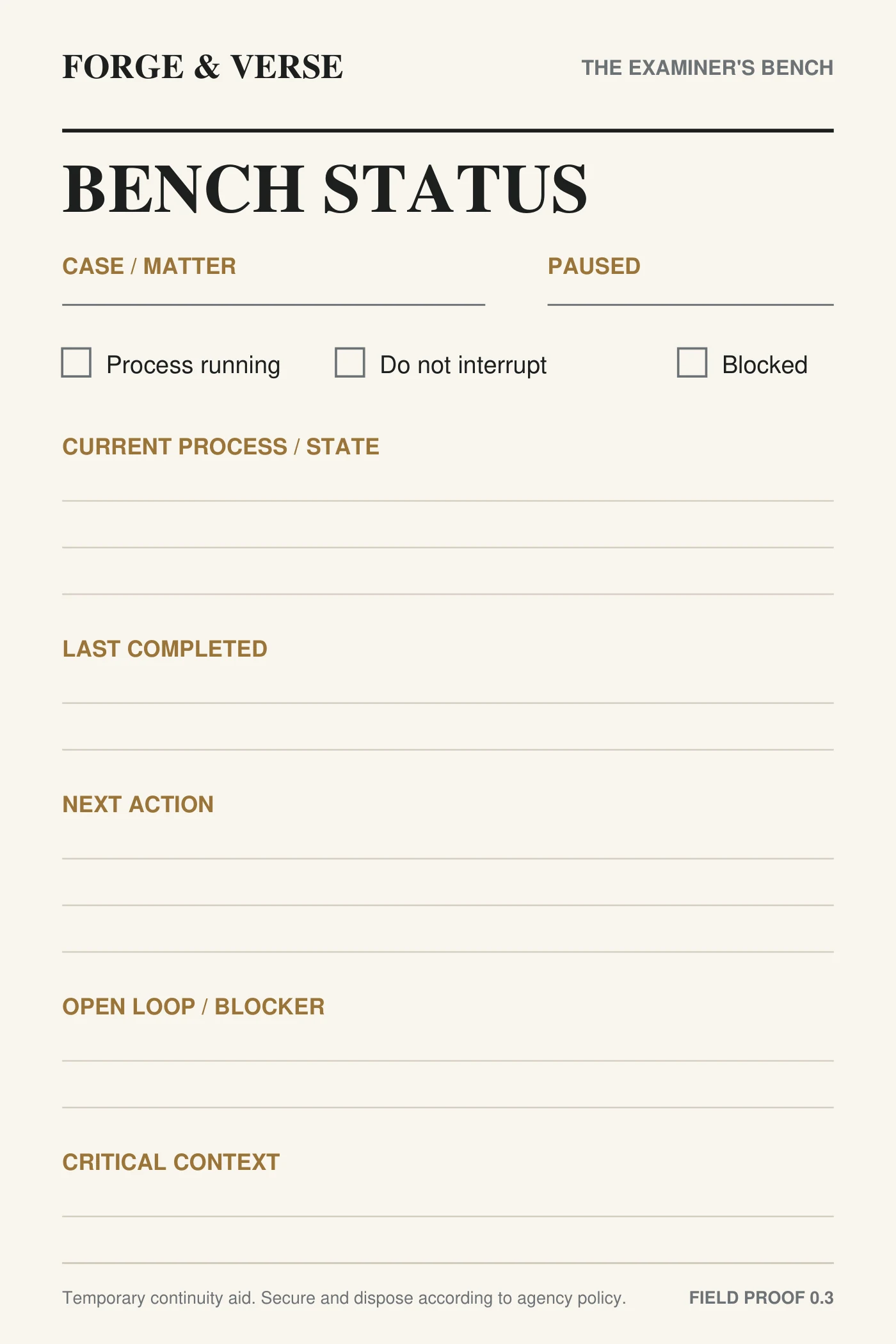
A refined 4 x 6 continuity proof for getting an active examination back into working memory in under thirty seconds.
The examiner stepping away from an active case overnight, over a weekend, or through an interruption
At the end of a shift, before the active state of a case disappears into the weekend.
Restore the active case state without reconstructing yesterday from six windows and a half-remembered thought
4 x 6 tear-away notepad
Taking shape
The study moves only when the current question is resolved well enough to earn the next one.
Prototype proof
Version 0.3 was loaded with three representative examination scenarios before being repackaged for field testing. The exercise exposed two weak prompts in the earlier proof and confirmed that ordinary-length technical notes can still fit without shrinking the card into a miniature form. This is structured desk simulation, not practitioner field validation yet.
Print and use
A refined printable studio proof for controlled evaluation. Use fictitious or sanitized information unless your agency approves a test.
Two-page interruption test, change rationale, and evaluation sheet.
Download filePrint at Actual Size to test the intended physical format.
Download fileTwo exact-size copies on one landscape letter page for ordinary office printers.
Download fileBundle integrity
SHA-256
1672c258ee9e2175c8f21e4b96b3cfa0820f3f455f639d490ad24663313386aa
An examination rarely pauses at a clean boundary. A tool may still be running. A question may be half answered. The next action may be obvious at 4:47 p.m. on Friday and strangely absent by Monday morning.
The Bench Status Pad exists for that gap. It is not trying to preserve the whole case. It preserves the small layer of working memory that makes the next start trustworthy.
The earlier proof used three state markers: Process running, Safe to resume, and Blocked. The middle marker asked the examiner to interpret a condition rather than record something actionable. Version 0.3 replaces it with Do not interrupt.
The final prompt changed too. Do not forget was easy to understand but too vague to define its own information. Version 0.3 calls that space Critical context: the fragile fact that matters on return but does not naturally belong under the process, next action, or blocker.
Before publishing the new proof, the card was loaded with three representative technical scenarios: a running mobile acquisition, an analysis task blocked on investigator confirmation, and a verification/documentation pass ready to move into targeted review. Those are layout and information-load simulations, not evidence that the release test has passed in the field.
The card records only what is needed to re-enter the examination quickly: where the process stands, what finished last, what comes next, what remains open, and any context that is too easy to lose over the interruption.
The state markers have one job: change what the returning examiner does. A marker that proves decorative in field use should disappear.
This is not a permanent examination note, chain-of-custody record, evidence inventory, or substitute for agency documentation. A completed card may still contain sensitive or discoverable information. Local policy decides how it is secured, retained, incorporated into the record, or destroyed.
The geometry is no longer the main question. The next test belongs to actual hands: ordinary handwriting, real interruptions, and measured re-entry time. Version 0.3 remains at the Sample stage until that test is passed.
Follow the thread
A useful object, a practice note, and a developing study can approach the same working moment from different directions.
Elsewhere on the anvil
When During the part of an examination when the examiner needs room to map, question, and think before the final record is written.
A 32-page, 5.5 x 8.5 production-oriented dummy for the examiner who thinks better with a pen in hand.
Open the study →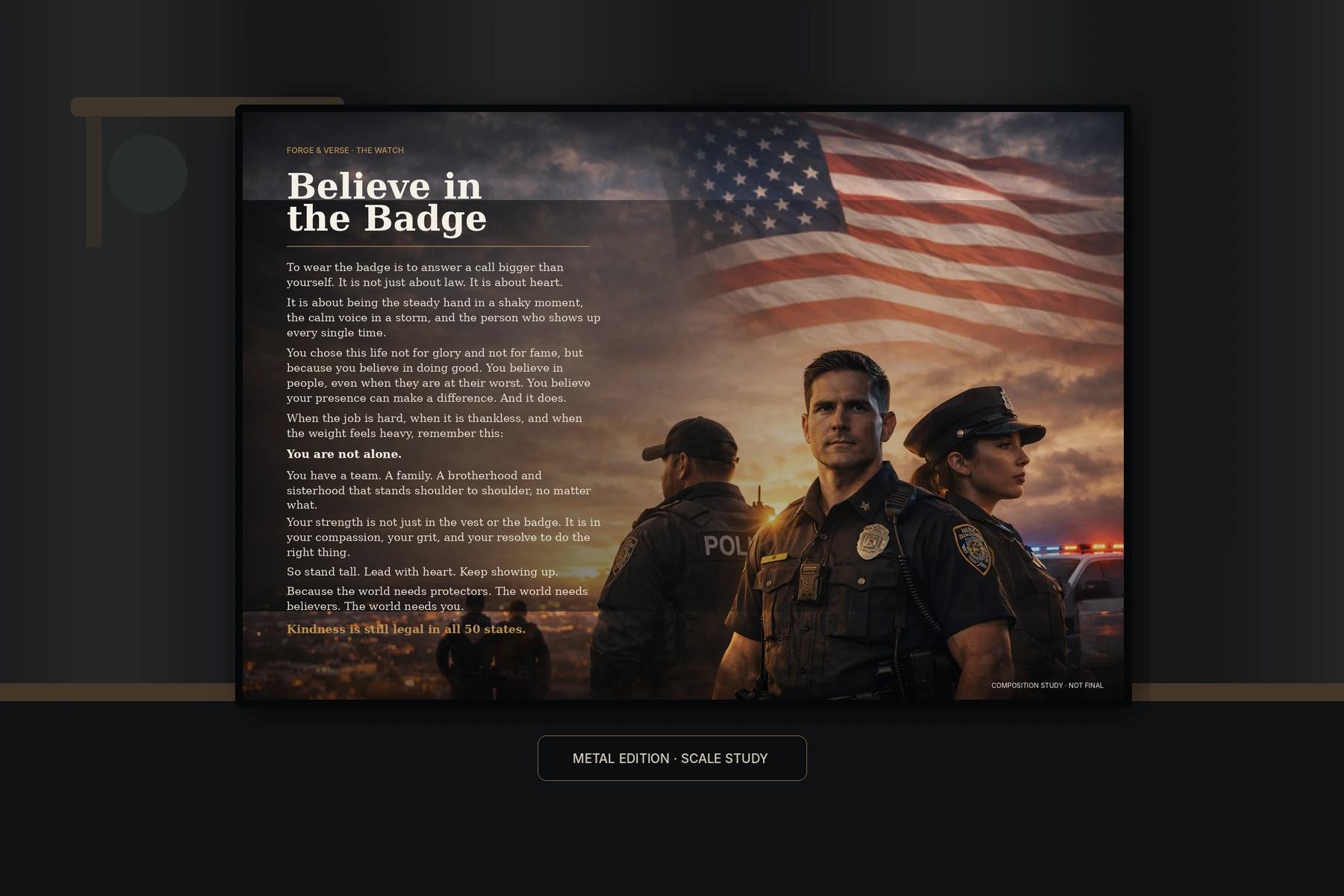
When When a professional space needs something more enduring than a slogan pinned to a wall.
The wall composition has reached production preflight, where a real source-resolution problem matters more than another room mockup.
Open the study →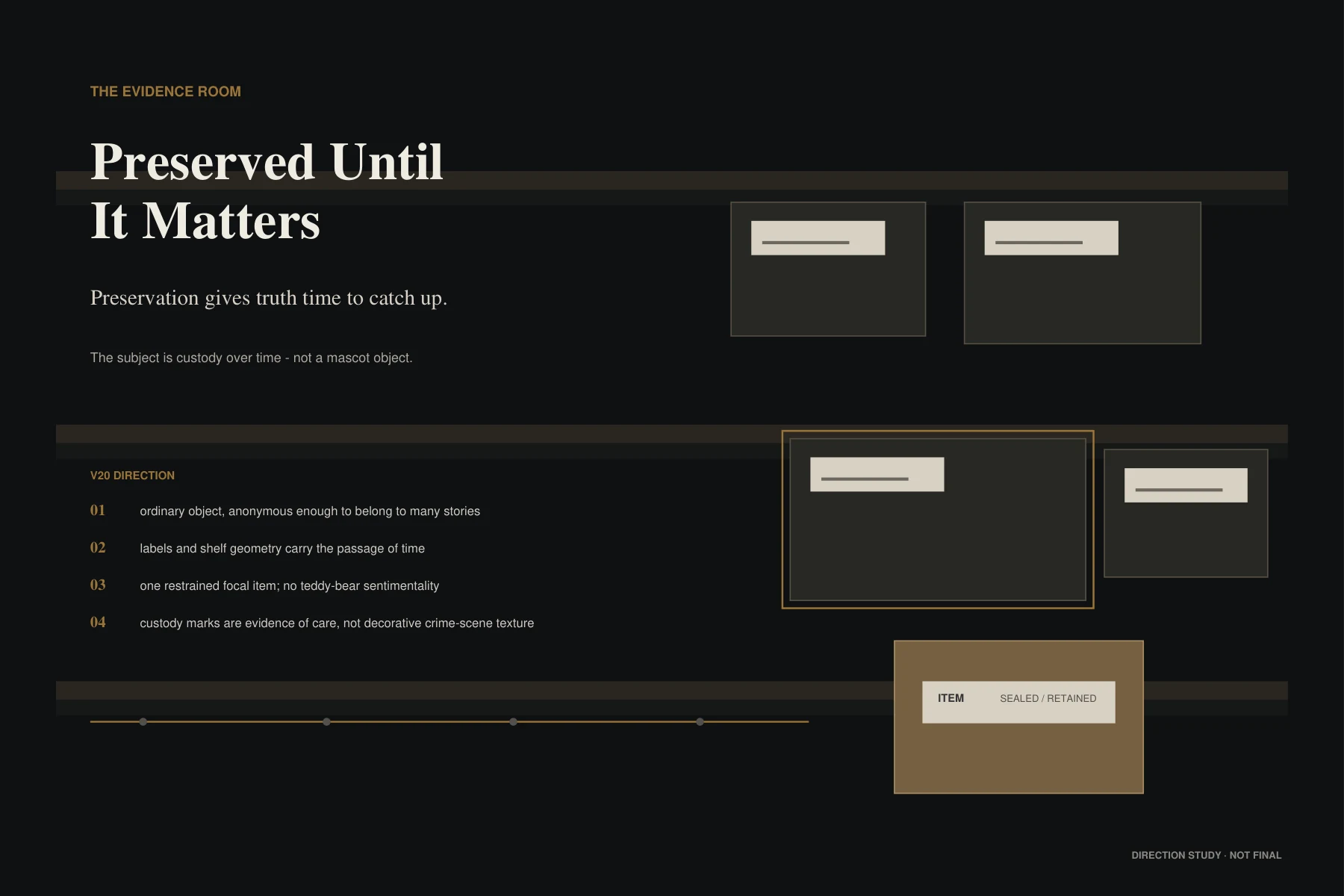
When When the long consequence of careful custody deserves to be visible in the room where that work happens.
A property-and-evidence wall study that now makes custody over time the visual subject instead of centering one sentimental object.
Open the study →