
Field-test guide
Two-page physical test protocol focused on trim, gutter, ruling, page mix, and pen behavior.
Download fileOn the Anvil · The Examiner's Bench
Production-oriented dummy
A 32-page, 5.5 x 8.5 production-oriented dummy for the examiner who thinks better with a pen in hand.
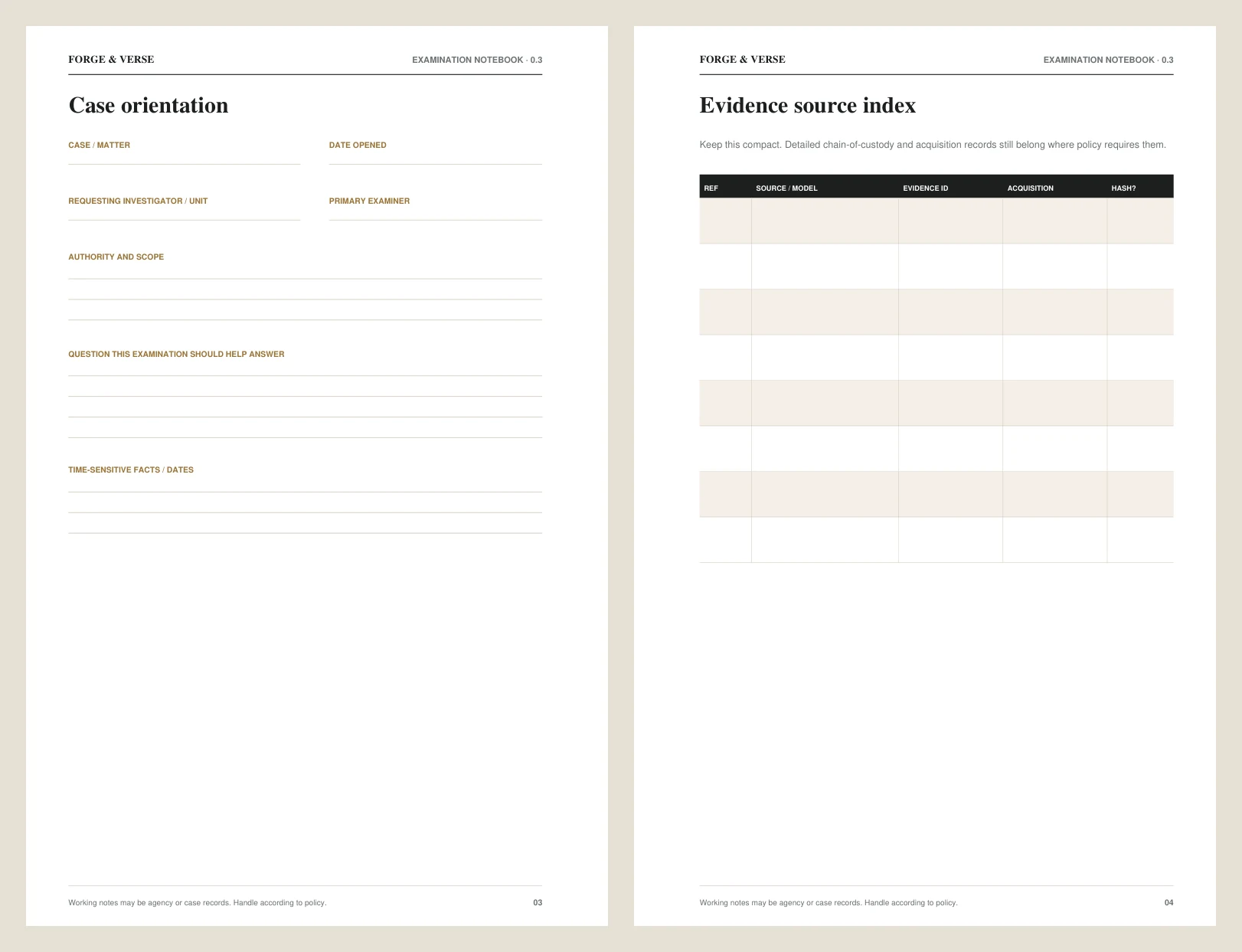
The examiner who thinks better with a pen in hand
During the part of an examination when the examiner needs room to map, question, and think before the final record is written.
Offer enough structure to orient the work without turning every page into somebody else's boxes
5.5 x 8.5 tactile notebook dummy
Taking shape
The study moves only when the current question is resolved well enough to earn the next one.
Prototype proof
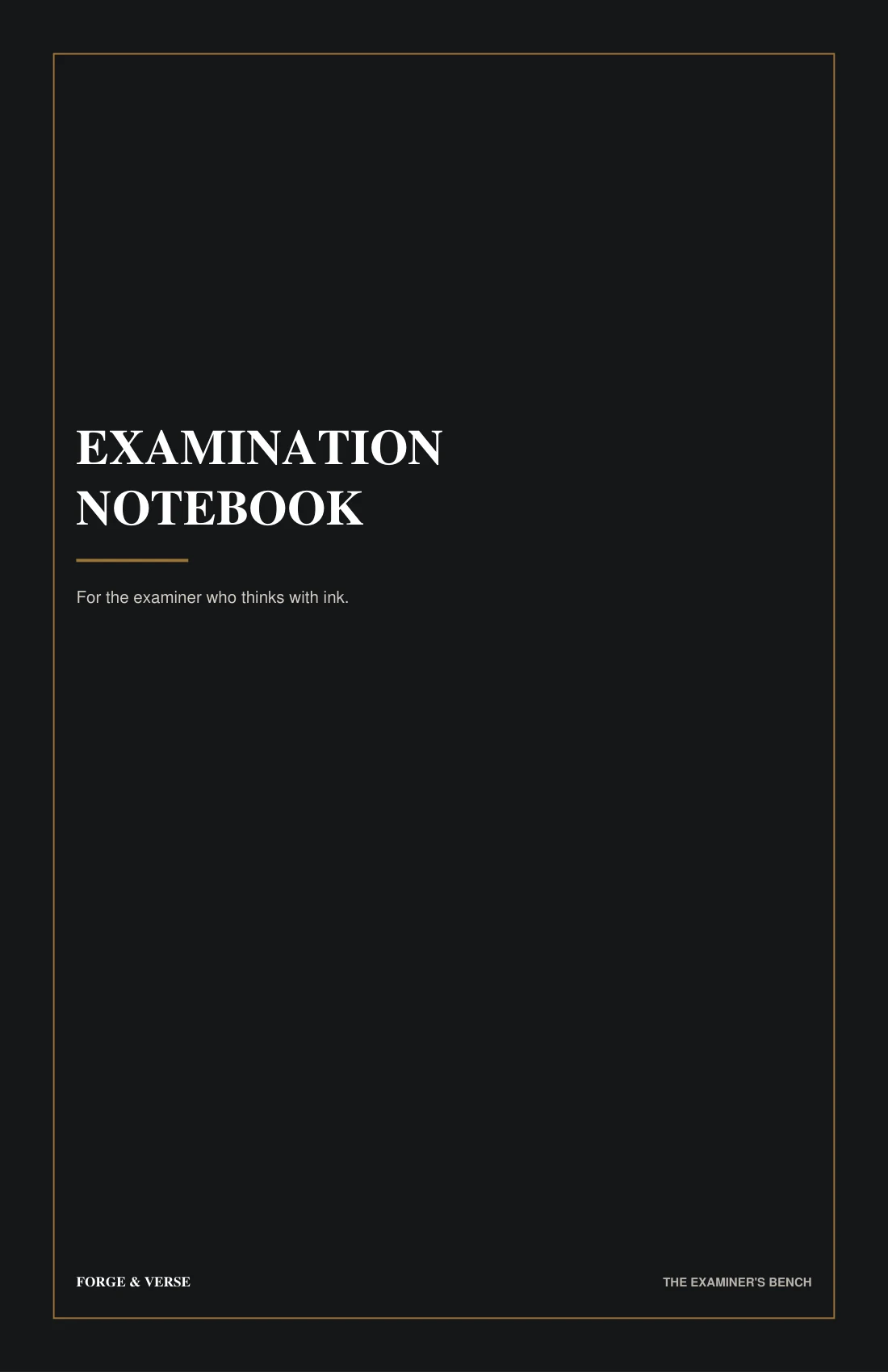
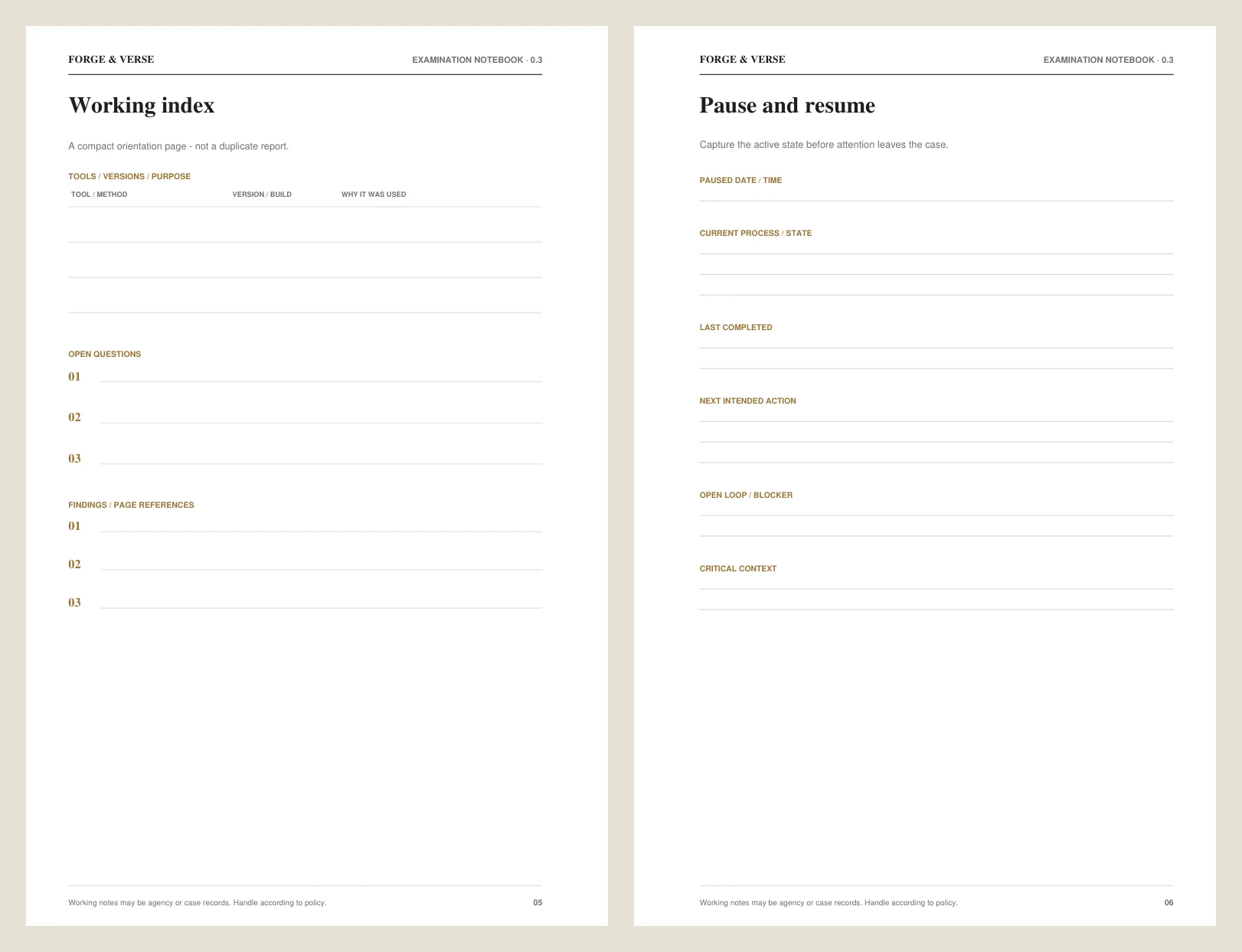
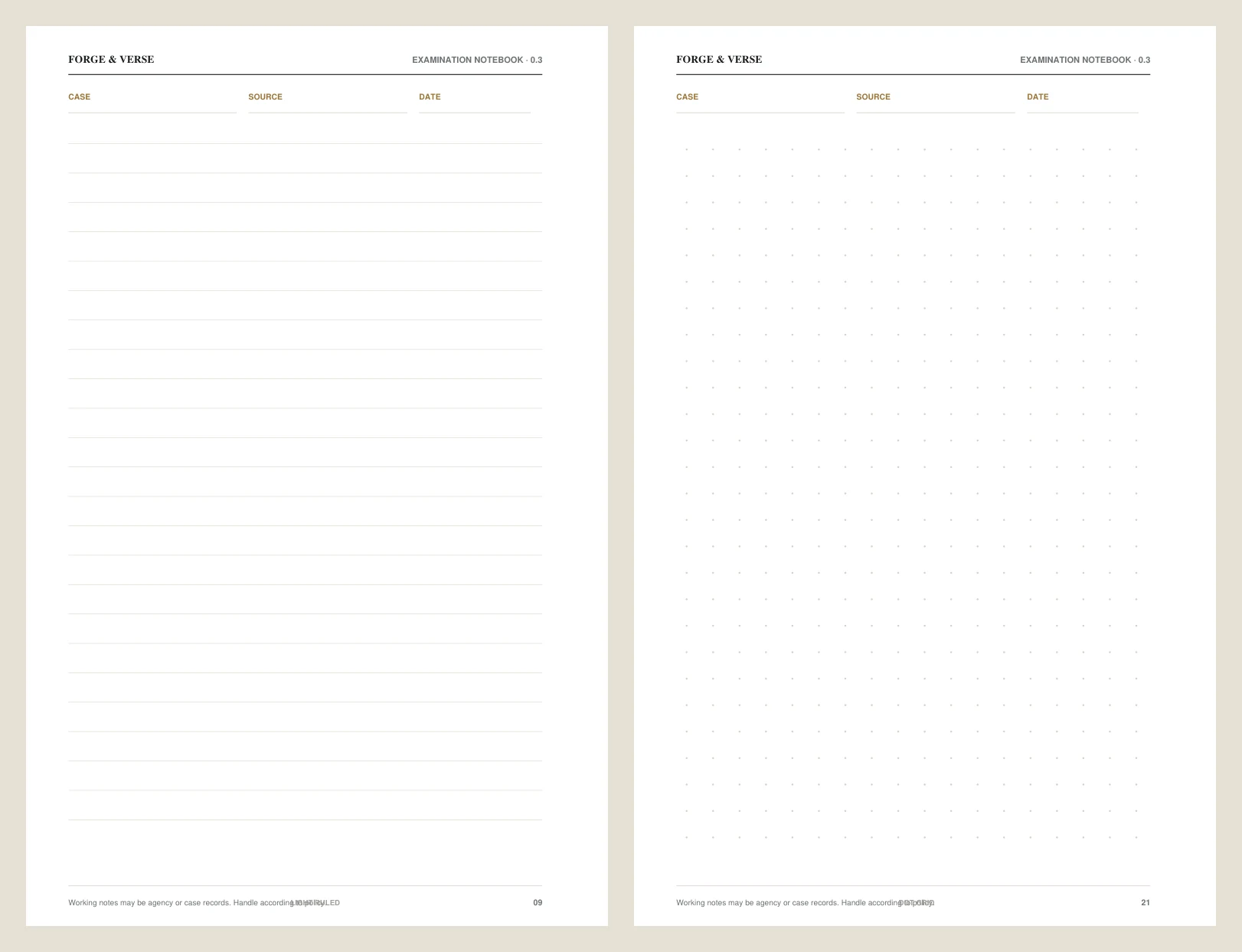
Version 0.3 moves from a twelve-page architecture sample to a thirty-two-page production-oriented dummy. Seven structured pages were compressed into five, the interior now uses mirrored gutter margins, and twenty-six pages are reserved for actual handwriting. The four note treatments are grouped into test runs so a practitioner can judge them instead of admiring a sampler.
Print and use
A printable production-oriented studio proof for controlled evaluation. Use fictitious or sanitized information unless your agency approves a test.
Two-page physical test protocol focused on trim, gutter, ruling, page mix, and pen behavior.
Download fileExact 5.5 x 8.5 production-oriented interior with mirrored margins and four working-page treatments.
Download fileBundle integrity
SHA-256
2fabe14e62943f9647af3d30a1f4737e14f4fd2871e63aadda5e80548db5ae6f
The first notebook proof was useful because it exposed the architecture: case orientation, evidence-source index, tool references, open questions, findings, continuity, and several note-page styles.
It was also too easy to mistake that sampler for the direction of the finished object.
Version 0.3 compresses the structured interior from seven pages to five. Tool/version references, open questions, and finding references now share one compact working index. The pause-and-resume page remains because continuity is a distinct working moment. The rest of the notebook belongs to the examiner.
The new proof is thirty-two pages at 5.5 x 8.5 inches. After the cover, twenty-six of thirty-one pages are open working pages: 83.9 percent of the interior.
That is much closer to the studio rule behind the piece. The notebook should be lightly structured, not administratively impressive.
The dummy also introduces mirrored gutter margins. A page can look generous as a loose PDF and become frustrating when the binding steals the inner edge. Version 0.3 starts testing the notebook as an object rather than a stack of rectangles.
The working pages are grouped into runs of light ruled, ruled-with-margin, dot-grid, and nearly open pages. The purpose is not to make the notebook look varied. It is to let a practitioner spend enough time in each treatment to notice whether the ruling helps or keeps announcing itself.
The next physical sample should answer whether a mixed interior is worth keeping at all.
It is not a paper forensic suite. It does not try to reproduce every case-management field, acquisition record, tool output, or report section. Those systems already exist.
This notebook is for the part of the work where a person is still thinking.
The architecture is mature enough for a bound sample. The unresolved questions are now physical: binding behavior, hand comfort, paper opacity and tooth, pen response, and which page treatment earns the majority of the interior.
Follow the thread
A useful object, a practice note, and a developing study can approach the same working moment from different directions.
Elsewhere on the anvil
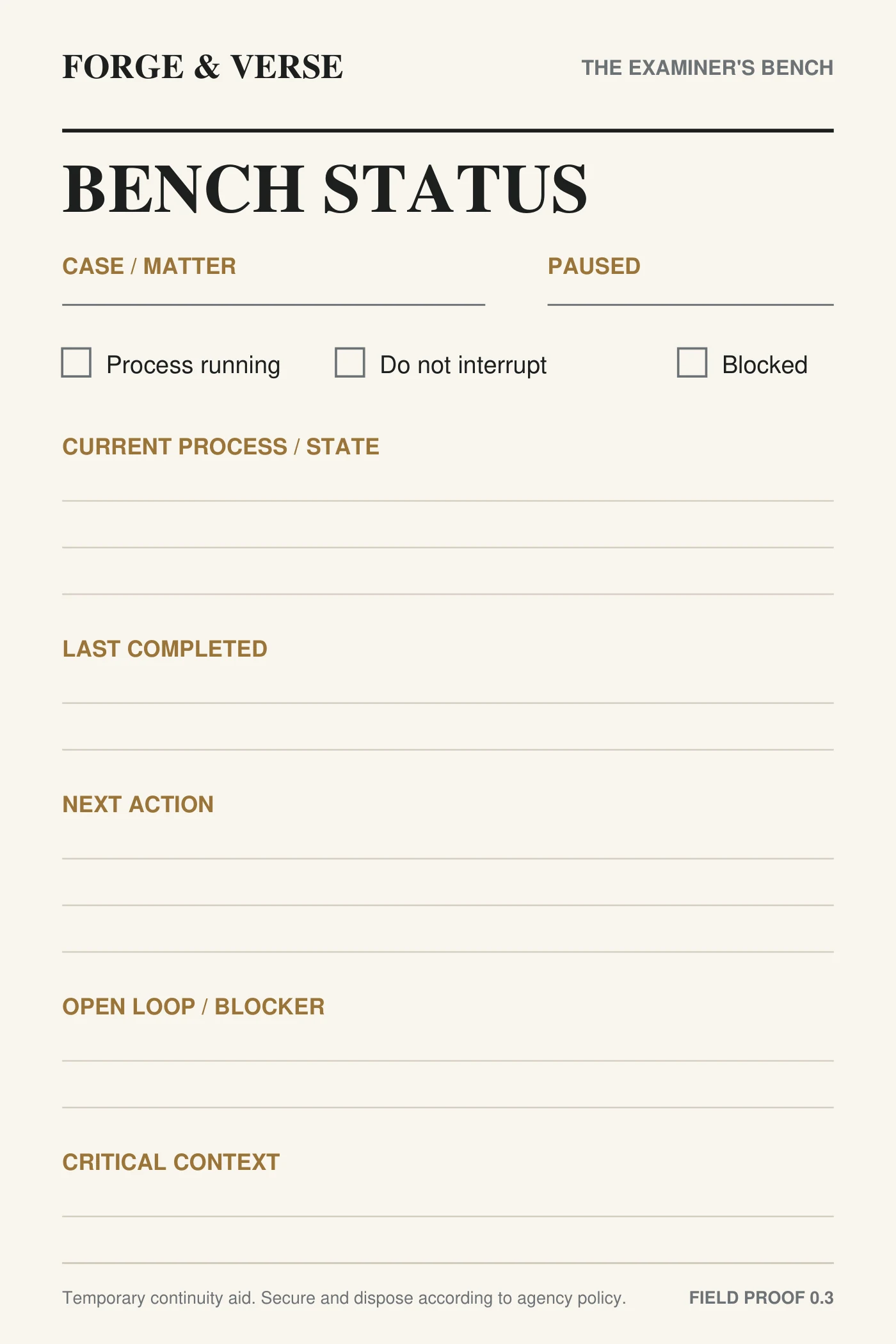
When At the end of a shift, before the active state of a case disappears into the weekend.
A refined 4 x 6 continuity proof for getting an active examination back into working memory in under thirty seconds.
Open the study →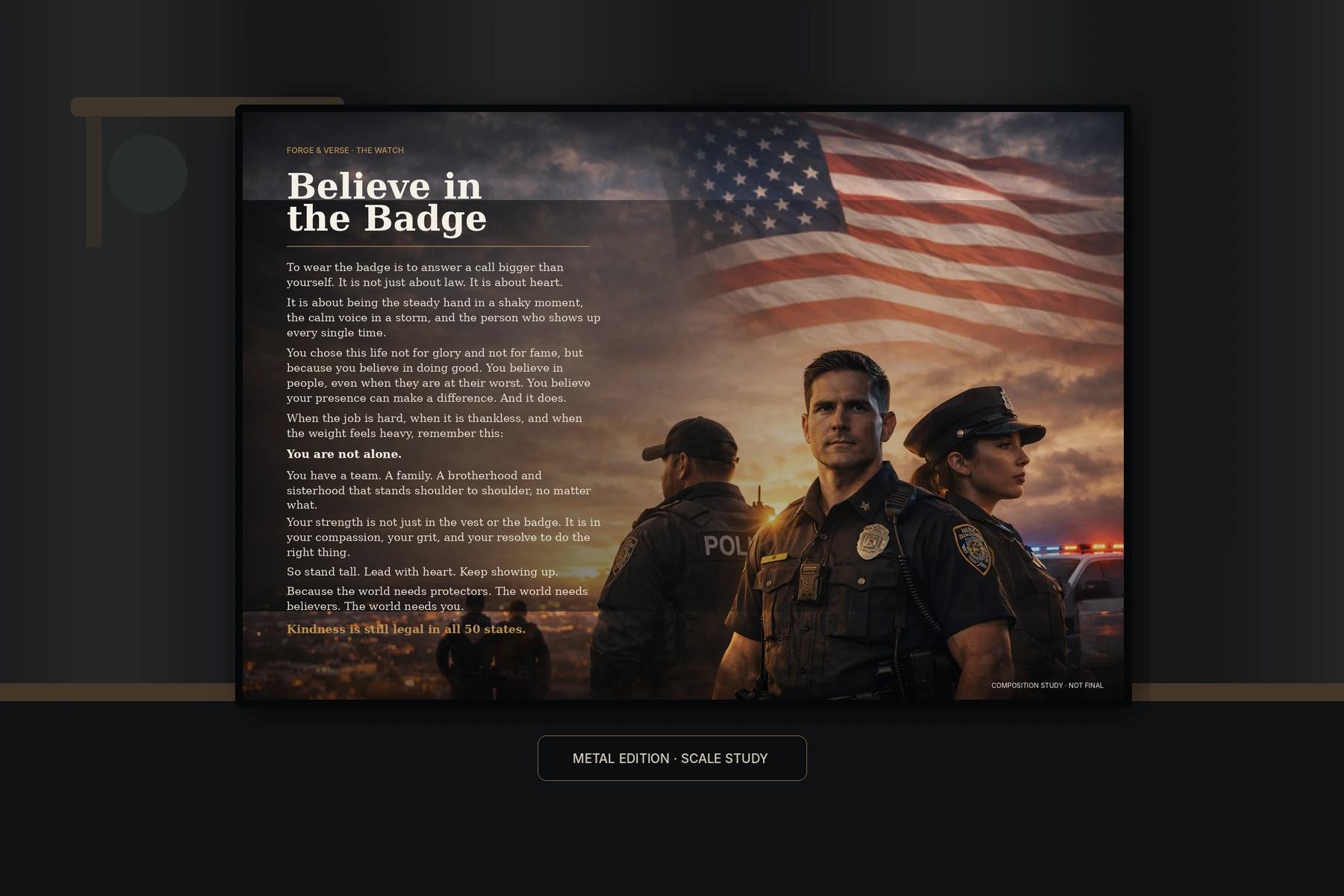
When When a professional space needs something more enduring than a slogan pinned to a wall.
The wall composition has reached production preflight, where a real source-resolution problem matters more than another room mockup.
Open the study →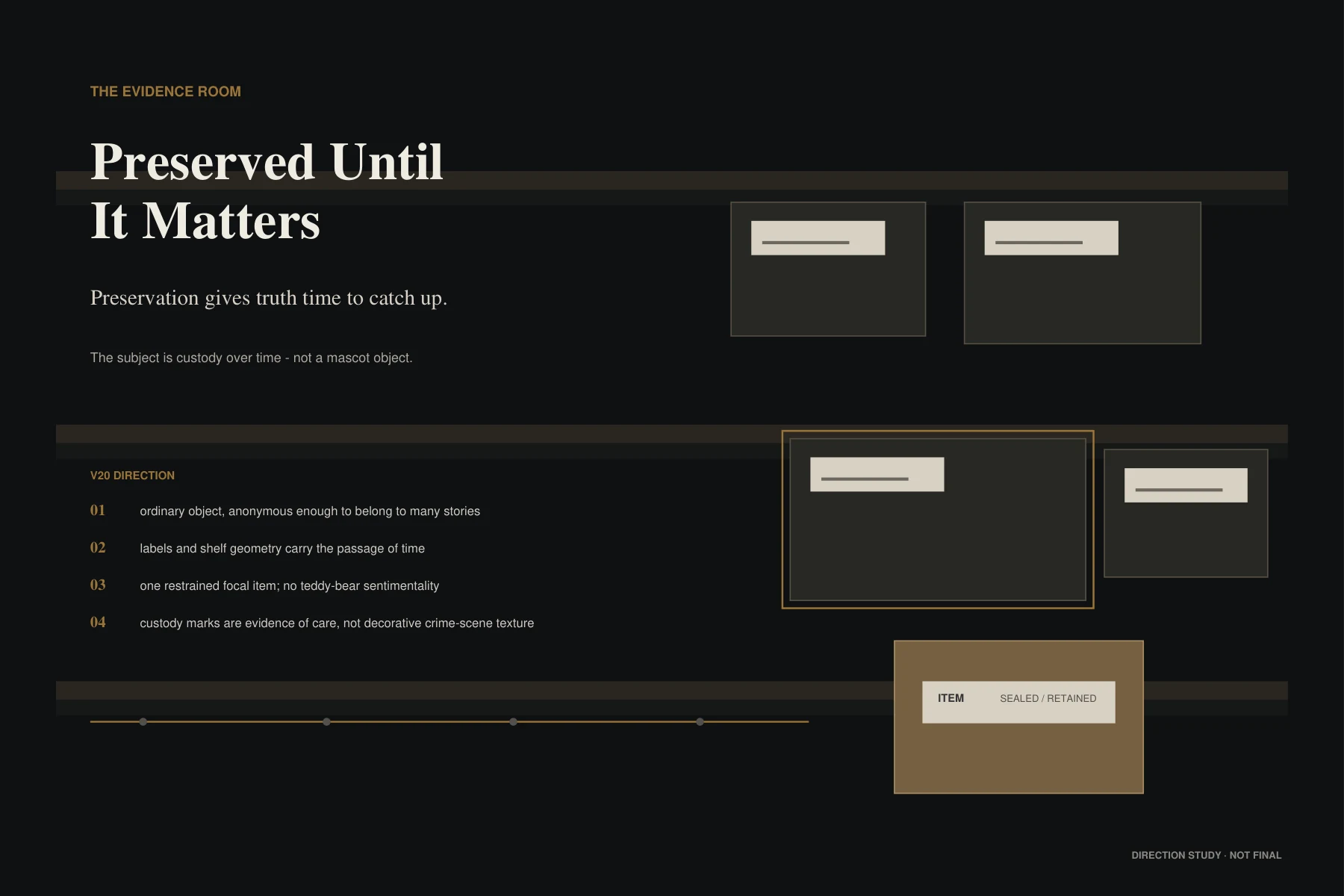
When When the long consequence of careful custody deserves to be visible in the room where that work happens.
A property-and-evidence wall study that now makes custody over time the visual subject instead of centering one sentimental object.
Open the study →